When Is a Tooth Extraction Necessary in Newark, NJ?
Oct 22, 2026
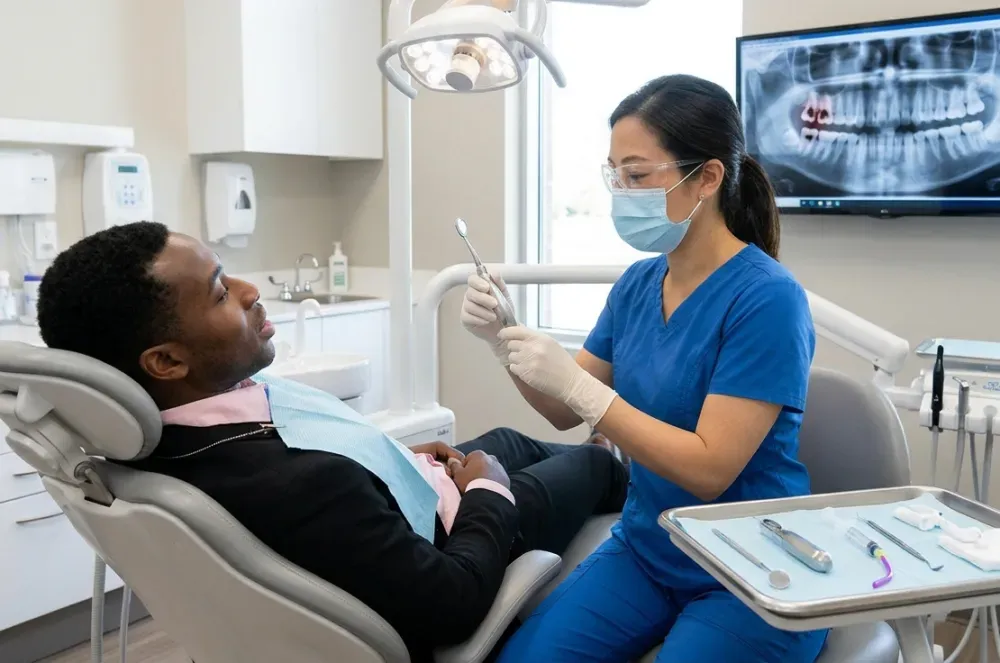
A tooth extraction is usually necessary only when a tooth can’t be saved, such as when decay or a crack goes too deep, gum disease has loosened it, infection won’t clear, or a wisdom tooth is impacted or causing damage. Dentists try to save natural teeth first, often with fillings, crowns, or a root canal. Nova Dental in Newark, NJ helps patients understand every option before any tooth is removed.
Hearing that you might need a tooth pulled can be unsettling, and it’s natural to wonder if it’s truly the only option. Often it isn’t. Modern dentistry can save many teeth that once would have been removed. But there are times when taking a tooth out is the healthiest choice for the rest of your mouth, and knowing the difference helps you make a confident decision.
Your natural teeth are worth keeping whenever possible. They hold the bone in your jaw in place, keep neighboring teeth from shifting, and let you chew and speak normally. That’s why a good dentist treats tooth extraction as a last resort, not a quick fix.
Before recommending removal, your dentist will look at how much healthy tooth structure remains, the condition of the root and surrounding bone, and the health of your gums. A tooth with a deep cavity can often be rebuilt with a crown. A tooth with an infected nerve can usually be saved with a root canal. Extraction becomes the better option only when those treatments are unlikely to work or last.
These are the situations where extraction is most often recommended:
1. Severe decay: When a cavity has destroyed so much of the tooth that there’s nothing solid left to restore, removal may be the only option.
2. Advanced gum disease: Periodontitis can break down the bone that supports a tooth, leaving it loose. Once enough support is lost, the tooth can’t be stabilized.
3. A crack below the gumline: Some cracks can be fixed with a crown, but a fracture that runs deep into the root usually can’t be repaired.
4. Infection that won’t clear: If an infection keeps returning after treatment, or a root canal isn’t possible, removing the tooth stops the infection from spreading.
5. Problem wisdom teeth: According to the American Dental Association, wisdom teeth may need to come out when they cause pain, infection, cysts, gum disease, decay, or damage to neighboring teeth.
6. Crowding before orthodontic treatment: Occasionally, a tooth is removed to make room so the rest can be straightened properly.
7. Baby teeth that won’t fall out: A stubborn baby tooth can block a permanent tooth from coming in, so removing it lets the adult tooth erupt normally.
8. Injury: A tooth badly broken in an accident or sports injury may not be restorable.
Many problems that lead to extraction start with warning signs you can notice early. Pay attention to a tooth that feels loose, pain that lingers or throbs, swelling in your gums or face, a pimple-like bump near a tooth, or pain at the very back of your jaw where wisdom teeth come in. A tooth that’s cracked, chipped, or turning dark also deserves a closer look.
Catching these signs early often means a tooth can still be saved. If any of them sound familiar, searching for a “dentist near me” and booking an exam soon gives you the best chance of keeping your natural tooth.
Not all extractions are the same. A simple extraction is used for a tooth that’s fully visible above the gumline. After the area is numbed, the tooth is gently loosened and removed, usually in one short visit.
A surgical extraction is needed when a tooth is broken at the gumline, hasn’t fully come in, or is impacted below the gums, as many wisdom teeth are. This involves a small incision in the gum and sometimes removing the tooth in sections. These cases fall under oral surgery and may involve additional options to keep you comfortable.
At Nova Dental, every extraction starts with an exam and X-rays to understand the tooth’s position, root shape, and surrounding bone. The area is thoroughly numbed, so you should feel pressure but not sharp pain during the procedure.
Afterward, healing usually goes smoothly with a few simple steps. Bite gently on gauze to help a blood clot form, and rest for the rest of the day. For the first few days, avoid straws, smoking, and vigorous rinsing, since these can dislodge the clot and cause a painful condition called dry socket. Stick to soft foods, keep your head elevated, and use a cold compress to reduce swelling. Most people feel noticeably better within a few days.
Once a tooth is removed, it’s worth thinking about what comes next, especially for back teeth and teeth that show when you smile. A gap can let nearby teeth drift, affect your bite, and lead to bone loss in the jaw over time.
Dental implants are often the closest replacement to a natural tooth, since they’re anchored in the jawbone and help preserve it. Bridges and dentures are other options, depending on how many teeth are missing and your overall health. Your dentist can help you plan the replacement before or right after the extraction.
The right decision starts with an honest exam. Schedule a consultation or call us at 973-604-1600. We’ll review your X-rays, talk through every option, and only recommend removal when it’s truly the best choice. Patients from Belleville, North Newark, and Bloomfield visit our Bloomfield Avenue office for clear, honest advice.
1. Can a tooth be saved instead of extracted?
Often, yes. Many damaged teeth can be saved with a filling, crown, or root canal. Extraction is usually recommended only when those treatments won’t work or last.
2. Does a tooth extraction hurt?
The area is fully numbed, so most people feel pressure rather than pain. Some soreness for a few days afterward is normal and usually manageable.
3. How long does it take to heal after an extraction?
Most people feel much better within a few days. The gum tissue heals over a couple of weeks, while the bone underneath continues to fill in over several months.
4. What is a dry socket?
Dry socket happens when the blood clot in the extraction site is lost too early, exposing the bone. Avoiding straws, smoking, and hard rinsing for the first few days helps prevent it.
5. Should I replace a tooth after it’s pulled?
In most cases, yes, especially for back teeth and visible front teeth. Replacing the tooth helps prevent shifting, bite problems, and bone loss.