Tooth Sensitivity Treatment in East Orange, NJ | Nova Dental
Oct 31, 2026
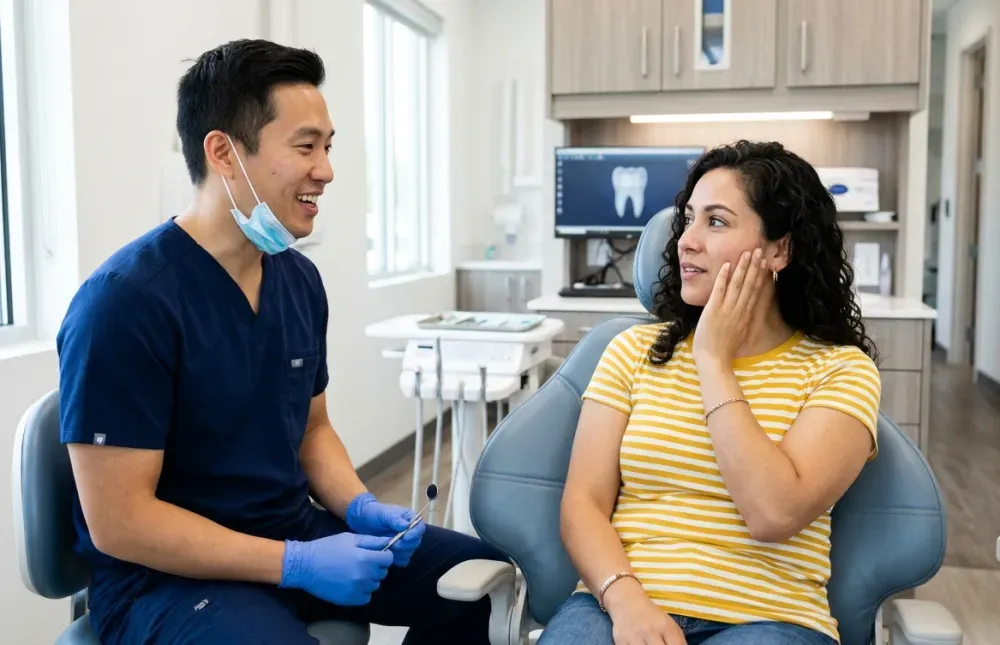
If your tooth is suddenly sensitive to hot or cold, start by switching to a soft toothbrush and a desensitizing toothpaste, and go easy on very hot, cold, and acidic foods for a few days. If the pain lingers for more than a few seconds, keeps getting worse, or centers on one tooth, book an exam. Nova Dental in East Orange, NJ can find the cause and treat it.
You take a sip of iced coffee, and a sharp jolt shoots through one side of your mouth. Or the first bite of hot soup makes you flinch. Most of the time, that feeling comes from a tooth surface that has lost some of its protection, which is common and very treatable. Sometimes, though, it’s an early warning of something that needs attention. The pattern of the pain is what tells the two apart.
Beneath your enamel is a softer layer called dentin, which is filled with tiny channels leading toward the nerve. When enamel wears thin or gums pull back and expose the root, those channels open up, and hot, cold, sweet, or acidic things can travel straight to the nerve.
The American Dental Association lists worn enamel, exposed roots, cavities, worn fillings, cracked teeth, and gum disease among the most common causes. That range is why treating sensitivity well starts with figuring out which one is behind yours.
A few details narrow things down quickly. A brief twinge across several teeth that fades within seconds usually points to worn enamel or mild gum recession. Pain that hangs on after the hot or cold is gone suggests the nerve itself is irritated. If one tooth reacts to sweets, a cavity is a likely suspect. Sharp pain when you bite down or release can mean a crack.
Timing matters too. Sensitivity that started right after professional teeth whitening or a new filling is usually temporary and fades on its own within a few days to a couple of weeks. Sensitivity that has been building slowly for months tends to have a cause that won’t go away without treatment.
For mild sensitivity that comes and goes, these steps often bring real relief:
1. Switch to a soft-bristled brush: Brush with light pressure in small circles. Hard scrubbing wears enamel and pushes gums back.
2. Use a desensitizing toothpaste: Use it twice a day, every day. It typically takes a few weeks of steady use before you notice a difference.
3. Cut back on acidic foods and drinks: Soda, sports drinks, citrus, and wine soften enamel. Rinse with water afterward and give your teeth some time before brushing.
4. Ease up on temperature extremes: Let very hot drinks cool slightly, and use a straw for cold ones to keep them away from sensitive spots.
5. Watch for grinding: A sore jaw in the morning or flattened tooth edges can mean you grind at night, which wears enamel over time.
6. Keep track of the details: Note which tooth hurts, what triggers it, and how long it lasts. That information makes your exam faster and more accurate.
Some sensitivity is a sign that something needs professional treatment. Book an exam within a few days if the pain lasts longer than a few seconds after the trigger is gone, stays focused on one tooth, keeps getting worse, wakes you at night, or hurts when you chew. Swelling in your gums or face, a pimple-like bump near a tooth, or fever means you should call the same day.
In those situations, finding a “dentist near me” quickly matters far more than trying another toothpaste, because the underlying problem usually keeps progressing.
At Nova Dental, treatment depends on what the exam finds. Worn enamel or exposed roots often respond well to an in-office fluoride varnish or a desensitizing coating, and some exposed areas can be sealed with bonding so they’re protected again. A cavity or a worn filling is repaired directly, and a cracked tooth may need a crown to hold it together.
When sensitivity comes from gum recession or inflammation, getting the gums healthy comes first, and gum therapy can help control bacteria between cleanings. If the nerve inside the tooth is damaged beyond recovery, a root canal removes the source of the pain and saves the tooth.
You don’t have to keep avoiding cold drinks or chewing on one side. Schedule a consultation or call us at 973-604-1900. Our Park Avenue East Orange office can pinpoint what’s causing the sensitivity and build a plan that fixes it.
1. Why is my tooth suddenly sensitive?
Sudden sensitivity often comes from a new cavity, a small crack, a worn filling, gum recession, or a change in routine, like a new whitening product or brushing harder than usual.
2. How long does sensitivity last after a filling?
Usually a few days to a couple of weeks. If it gets worse instead of better, or biting hurts, the filling may need a small adjustment.
3. Can sensitive teeth be fixed permanently?
Often, yes. Once the cause is treated, be it decay, a crack, or exposed roots, the sensitivity usually goes away or improves significantly.
4. Is sensitivity always a sign of a cavity?
No. Many cases come from worn enamel or receding gums. A cavity is more likely when the sensitivity is limited to one tooth or triggered by sweets.
5. Does teeth whitening cause sensitivity?
It can, but it’s usually temporary. Your dentist can adjust the whitening approach or treat the sensitivity first if your teeth are already sensitive.