How to Tell If You Have a Cavity in East Orange, NJ
Oct 02, 2026
Common signs of a cavity include sensitivity to sweets, hot, or cold, a brown, black, or chalky white spot on a tooth, pain when you bite, food that keeps catching in the same place, and a rough edge or small hole you can feel with your tongue. Early cavities often cause no symptoms at all. Nova Dental in East Orange, NJ can find them during a routine exam.
The tricky thing about cavities is that the ones easiest to fix are the ones you can’t feel. By the time a tooth starts to hurt, decay has usually moved past the hard outer enamel into the softer layer underneath. That’s why the quieter clues matter, and why regular checkups catch far more cavities than toothaches ever do.
Every time you eat or drink something with sugar or starch, bacteria in your mouth turn it into acid. That acid pulls minerals out of your enamel. Saliva and fluoride help put some of those minerals back, but when the acid attacks happen too often, the enamel loses ground and starts to weaken.
According to the National Institute of Dental and Craniofacial Research, the earliest sign of decay is a white spot where minerals have been lost, and at that stage it can often be stopped or even reversed with fluoride. Once the enamel breaks down and a hole forms, though, the tooth can’t repair itself, and a dentist needs to fix it.
Cavities don’t appear overnight. They move through stages, and each one changes what treatment looks like:
1. White spot: A chalky patch where enamel has lost minerals. There’s no pain, and fluoride treatment can often reverse it.
2. Enamel decay: A small hole forms in the outer layer. You might feel a rough spot with your tongue, but it usually doesn’t hurt yet. A small filling is typically all it needs.
3. Dentin decay: Once decay reaches the softer layer beneath the enamel, it spreads faster. This is when sensitivity to sweets and cold often begins. A larger filling or sometimes a crown may be needed.
4. Nerve involvement: If decay reaches the pulp at the center of the tooth, pain tends to linger or throb, and root canal treatment is often the way to save the tooth.
5. Abscess: An infection at the root can cause swelling, a bump on the gum, a bad taste, or fever. This needs prompt care.
The earlier a cavity is caught, the smaller, faster, and less expensive the repair.
Most cavities announce themselves in small ways long before they become painful. A quick zing when you eat candy or sip soda is one of the most common early clues, because sugar seeps into the weakened spot and irritates the tooth. Sensitivity to cold water or ice cream that seems to come from one specific tooth is another. You might notice floss shredding in the same gap every time, food getting stuck in one place, or a spot on a tooth that looks darker or duller than the rest.
Cavities also tend to show up in predictable places. The deep grooves on the chewing surfaces of back teeth trap food easily. The tight spaces between teeth are hard to clean and hard to see. The edges of older fillings can wear and let bacteria slip underneath, and when gums recede, the exposed root surface is softer than enamel and decays more easily.
If a few of these sound familiar, a quick search for a “dentist near me” and an exam now usually means a smaller repair than waiting until the tooth hurts.
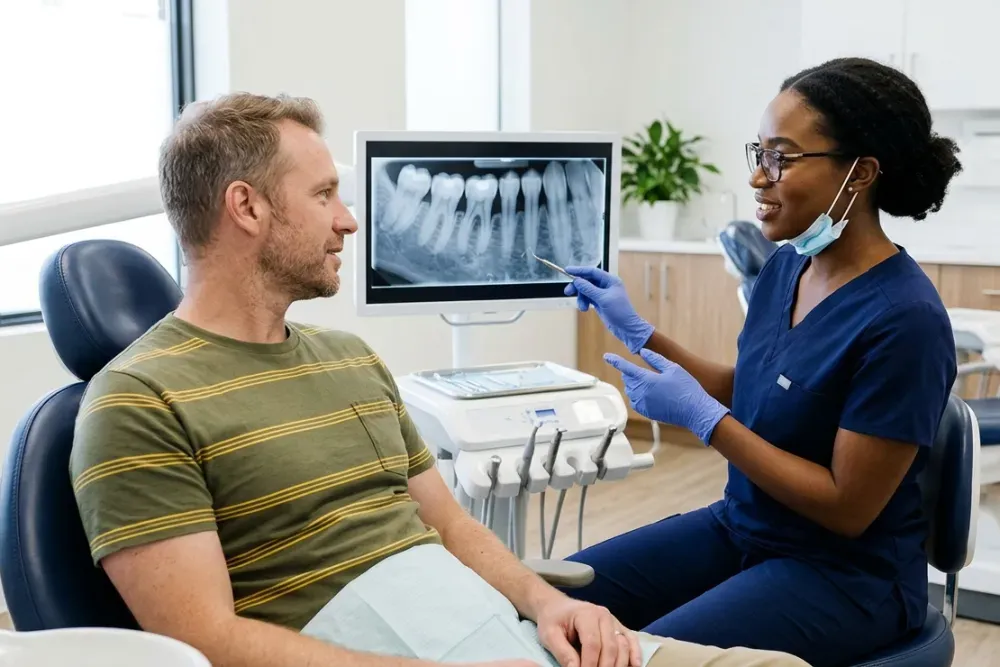
At Nova Dental, a routine exam combines a careful visual check with gentle testing for soft or sticky spots on the enamel. X-rays fill in what the eye can’t reach, especially decay hiding between teeth or underneath existing fillings.
Not every dark spot is a cavity, either. Coffee, tea, and tobacco can leave surface stains that look worrying but don't decay at all. An exam sorts out which spots need treatment and which just need a cleaning, so you’re not guessing.
A few habits make a real difference. Brush twice a day with fluoride toothpaste and clean between your teeth daily, since floss reaches the spots where many cavities start. Pay attention to how often you snack, not just what you eat. Sipping a sweet drink slowly over an afternoon keeps your teeth bathed in acid far longer than finishing a dessert in one sitting. Drinking fluoridated tap water helps too, and for kids, sealants on the back teeth add a protective layer over those deep grooves.
A cavity caught early is one of the simplest fixes in dentistry. Schedule a consultation or call us at 973-604-1900. Our Park Avenue East Orange office sees patients from across East Orange, Orange, and nearby communities.
1. Can a cavity go away on its own?
Only at the very earliest stage. A white spot can sometimes be reversed with fluoride, but once a hole forms in the enamel, it won’t heal without treatment.
2. Do cavities always hurt?
No. Many cavities cause no pain at all until they reach the deeper layers of the tooth, which is why checkups matter even when nothing feels wrong.
3. How long can I wait to get a cavity filled?
It’s best not to wait. Decay can move from the enamel into the dentin, and eventually the nerve, turning a small filling into a much bigger repair.
4. Does getting a filling hurt?
The area is numbed first, so most people feel pressure rather than pain. Some mild sensitivity for a few days afterward is normal.
5. Why do I keep getting cavities even though I brush?
Frequent snacking, skipping floss, dry mouth, and worn edges on old fillings are common culprits. Your dentist can help pinpoint what’s driving it for you.