How Long Does a Dental Crown Take in East Orange, NJ?
Oct 17, 2026
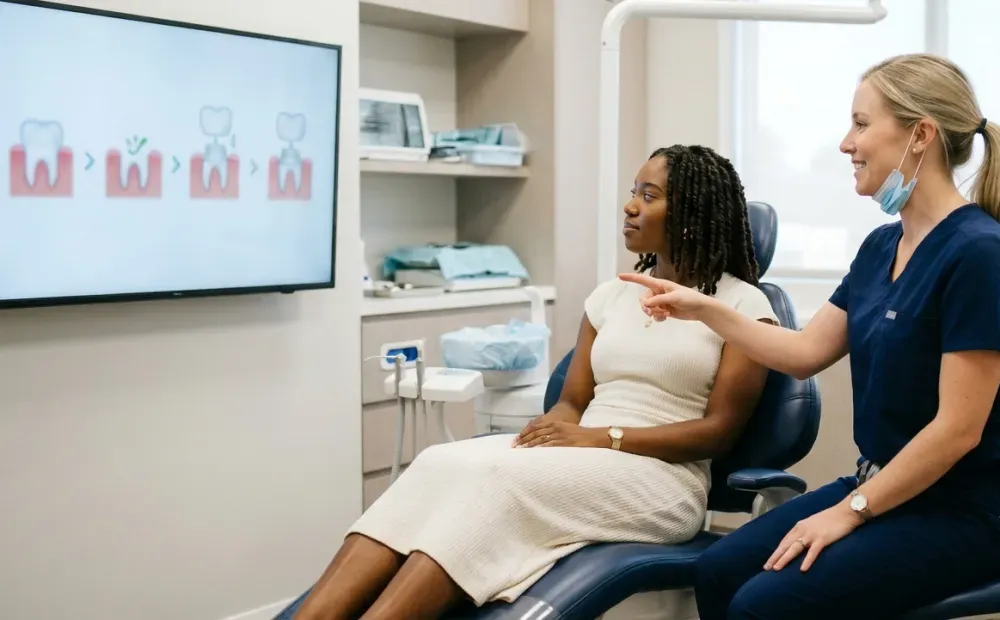
A traditional dental crown usually takes two visits spaced about two to three weeks apart, with the first appointment lasting roughly one to two hours. Same-day crowns, made with an in-office milling machine, can be completed in a single visit. Nova Dental in East Orange, NJ offers both approaches, and the right one depends on your tooth and your schedule.
When someone hears they need a crown, the next thought is usually practical: how much time off work, how many trips to the office, and how long they’ll be walking around with a temporary. Those are fair questions. A crown also often follows something else, like a cracked tooth or a root canal, so the full timeline depends on where your tooth is starting from.
A crown is a custom cap that covers a weakened tooth and restores its shape and strength. The most common reasons are a cracked or broken tooth, a filling so large there isn’t much natural tooth left, a molar that’s had a root canal, or teeth worn down by grinding. Dental crowns also sit on top of dental implants and can improve the look of a badly discolored or misshapen tooth.
The reason for your crown shapes the timeline. A cracked tooth with a healthy nerve can go straight to crown preparation. A tooth with infection may need a root canal first, which adds at least one appointment before the crown work begins.
Most crowns follow a two-appointment process:
1. First visit (about one to two hours): The tooth is numbed, any decay is removed, and the outer layer is shaped so the crown can fit over it. An impression or digital scan records the exact shape, and the color is matched to your neighboring teeth. You leave with a temporary crown protecting the tooth.
2. The wait (usually two to three weeks): A dental lab crafts your permanent crown. During this time, chew on the other side when you can, skip sticky or very hard foods, and slide floss out sideways rather than pulling it up, so the temporary stays in place.
3. Second visit (often under an hour): The temporary crown comes off, the permanent crown is checked for fit, bite, and color, and then it’s bonded in place.
This approach works for nearly every situation and gives the lab time for detailed shading, which can matter for front teeth.
At Nova Dental, some patients can skip the temporary entirely with same-day dentistry. The tooth is prepared the same way, but instead of sending an impression to a lab, a digital scan guides an in-office milling machine that shapes your crown while you wait. It’s then fitted and bonded during the same visit, which typically takes a few hours from start to finish.
Same-day crowns aren’t the right fit for every case. Complex bite problems, several crowns at once, or front teeth that need highly customized color layering may be better served by a lab-made crown. Your dentist can tell you which option makes sense once they’ve examined the tooth.
The main differences come down to visits, timing, and the type of case:
Your dentist can recommend the right option once they’ve looked at the tooth and your bite.
A few things can stretch the timeline. A root canal before the crown is the most common. If a tooth has lost a lot of structure, a buildup may be placed first to give the crown something solid to grip. Gum inflammation around the tooth may need to settle before an accurate impression can be taken, and some insurance plans require pre-approval before crown work starts.
Because most crowns involve at least one return trip, choosing a “dentist near me” you can easily get back to matters more than people expect, especially if adjustments are needed after the crown goes on.
Most people go back to work or school the same day. Mild sensitivity to hot and cold for a few days is normal while the tooth settles. If your bite feels high or uneven once the numbness wears off, call to have it adjusted, since a crown that hits first can make the tooth sore. After that, care for it like a natural tooth: brush, floss along the gumline, and keep up with regular checkups.
The fastest way to know your timeline is to have the tooth examined. Schedule a consultation or call us at 973-604-1900. Patients from across East Orange and nearby Orange visit our office for crowns planned around work, school, and family schedules.
1. Does getting a crown hurt?
The tooth is numbed before any work begins, so the procedure itself shouldn’t hurt. Some soreness in the gums or mild sensitivity for a few days afterward is common.
2. Can I eat normally with a temporary crown?
Mostly, yes. Stick to softer foods on that side and avoid gum, caramel, and very hard foods that could pull the temporary loose.
3. What should I do if my temporary crown falls off?
Keep it, and call the office. The tooth underneath is more sensitive without its cover, so it’s best to have the temporary put back on quickly.
4. How long does a dental crown last?
Many crowns last 10 to 15 years or longer with good care. Grinding, chewing ice, and skipping checkups can shorten that.
5. Can I go back to work right after getting a crown?
Usually, yes. The main thing to wait for is the numbness to wear off before eating, so you don’t accidentally bite your cheek or tongue.