Early Signs of Gum Disease in Newark, NJ | Nova Dental
Oct 21, 2026
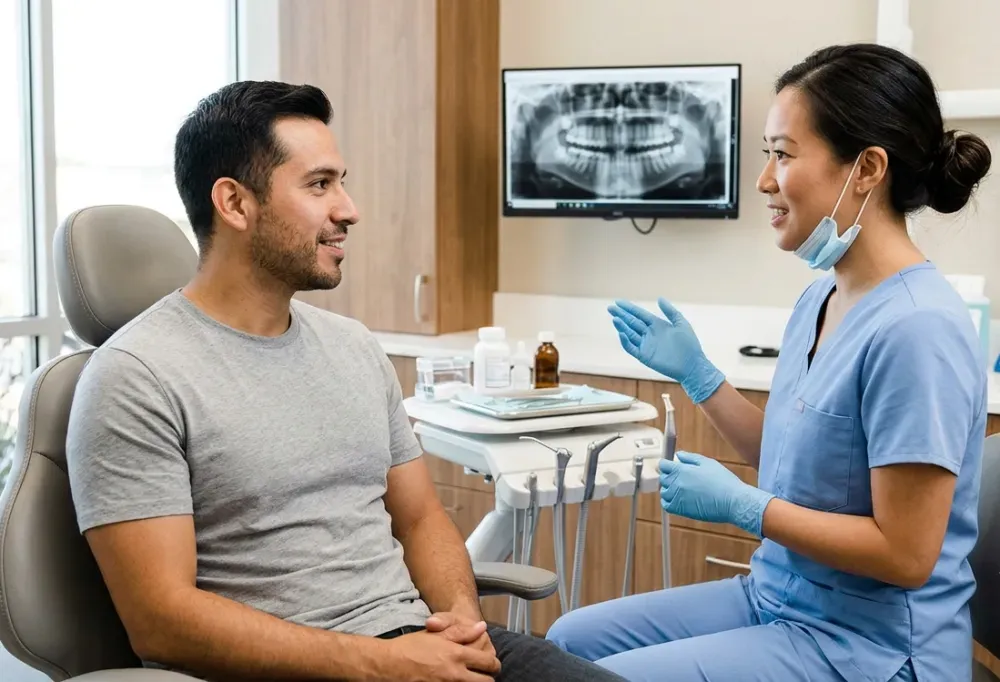
The earliest signs of gum disease are gums that bleed when you brush or floss, gums that look red or puffy instead of firm and pink, and bad breath that doesn’t go away. At this early stage, called gingivitis, the damage is usually reversible. Nova Dental in Newark, NJ can check your gums during a routine visit and catch changes you might not notice yourself.
Gum disease is easy to ignore because it rarely hurts at first. There’s no throbbing, no swelling in your face, nothing that forces you to call a dentist. That’s exactly what makes it worth paying attention to. By the time gum disease becomes painful, it has usually moved past the stage where it’s simple to fix.
These are the changes worth noticing, even if they seem minor:
If two or more of these sound familiar, a quick search for a “dentist near me” and an exam now is far easier than treating advanced gum disease later.
Gum disease has two broad stages, and the difference between them is the difference between an easy fix and a long-term condition.
Gingivitis is the early stage. Plaque, the sticky film of bacteria on your teeth, irritates the gums and makes them bleed. The bone and connective tissue holding your teeth in place haven’t been damaged yet. According to the National Institute of Dental and Craniofacial Research, early gum disease can often be reversed with consistent daily brushing and flossing.
Periodontitis is what happens when gingivitis goes untreated. Plaque hardens into tartar, which only a dental professional can remove, and the infection spreads below the gumline. Gums pull away from the teeth and form pockets where bacteria thrive. In healthy gums, the space between the gum and tooth is only about 1 to 3 millimeters deep. Dentists measure it with a small probe, and deeper readings are one of the clearest signs the disease has progressed. Over time, the bone supporting the teeth breaks down, and teeth can loosen or even need to be removed. At this stage, home care alone isn’t enough.
A few beliefs keep people from getting help early:
Myth: A little bleeding is normal.
Reality: Bleeding is a sign of inflammation. It’s common, but it isn’t healthy.
Myth: If it doesn’t hurt, it isn’t serious.
Reality: Early gum disease is usually painless. Pain tends to show up later, once the damage has spread.
Myth: Brushing harder will fix bleeding gums.
Reality: Scrubbing harder can actually push gums back further. Gentle brushing with a soft brush, plus daily flossing, works better.
Myth: Only older adults get gum disease.
Reality: Teens and young adults can develop gingivitis too, especially with braces, hormonal changes, or inconsistent flossing.
Myth: Mouthwash takes care of it.
Reality: Some rinses help, but no mouthwash removes plaque that’s stuck between teeth or tartar below the gumline.
Anyone can develop gum disease, but some factors raise the risk. Smoking and tobacco use are among the most significant, and they also make treatment less effective. Diabetes, hormonal changes during pregnancy, a family history of gum problems, stress, and certain medications that cause dry mouth all play a role too. Crowded or overlapping teeth can also trap plaque in places that are hard to clean.
If any of these apply to you, more frequent checkups are a simple way to catch problems before they progress.
At Nova Dental, treatment depends on the stage. For gingivitis, a professional cleaning combined with better daily habits is often all it takes for gums to recover. For deeper pockets, a deep cleaning called scaling and root planing removes tartar from below the gumline and smooths the root surfaces so the gums can reattach.
Some patients need extra help keeping bacteria under control between visits. Perio Protect uses custom trays to deliver medication to the gum pockets at home, which can support healing alongside regular cleanings.
The earlier gum disease is caught, the simpler it is to treat. Schedule a consultation or call us at 973-755-3500. Families from across Downtown Newark, the Ironbound, and nearby neighborhoods visit us for routine gum care.
1. Is gum disease reversible?
In the early stage, yes. Gingivitis can usually be reversed with professional cleanings and consistent home care. Advanced periodontitis can be managed, but bone that’s already lost doesn’t grow back on its own.
2. Can gum disease cause tooth loss?
Yes. Untreated periodontitis destroys the bone and tissue holding teeth in place, and it’s a leading cause of tooth loss in adults.
3. How often should I get cleanings if I have gum disease?
Often every three to four months instead of every six. More frequent visits keep bacteria from rebuilding below the gumline.
4. Is it normal for gums to bleed during pregnancy?
It’s common, because hormone changes make gums more sensitive to plaque. It still deserves attention, so let your dentist know you’re pregnant.
5. Does an electric toothbrush help prevent gum disease?
It can, especially if it has a pressure sensor that keeps you from brushing too hard. Daily flossing is still essential either way.