Are There Affordable Dental Implants in Bloomfield, NJ?
Nov 18, 2026
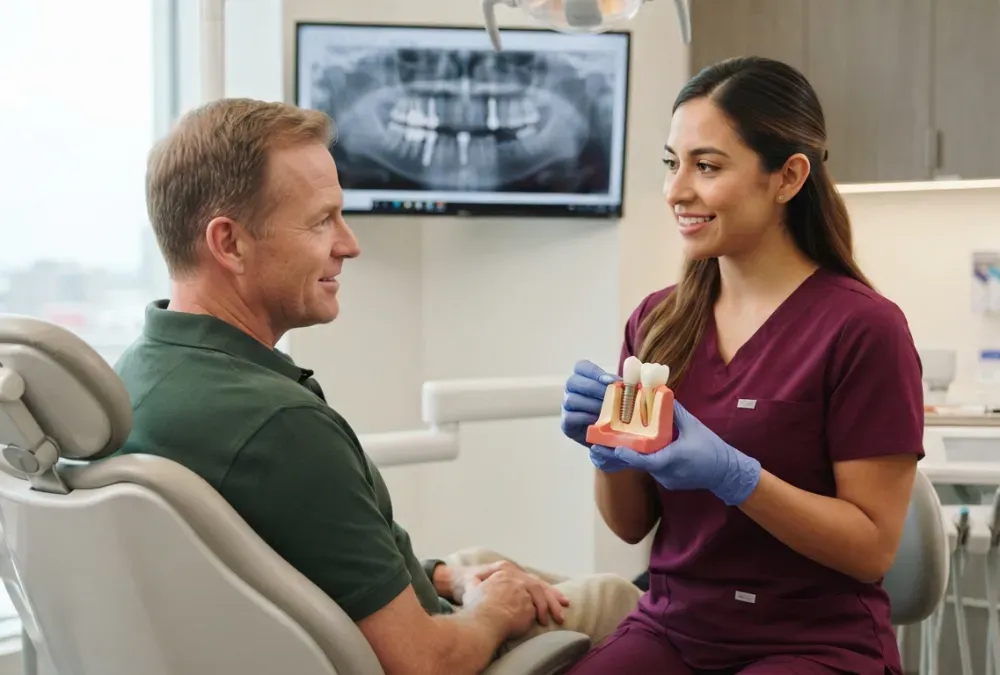
Quick Answer: Dental implants are a long-term investment, and the most manageable path starts with an exam that shows the real treatment plan, then a clear look at insurance and payment options. Nova Dental at its Bloomfield Avenue office offers dental implants, and the team can explain each step and cost before treatment begins.
A missing molar has a way of rearranging daily life. Chewing shifts to the other side, a favorite food gets skipped, and smiling in photos starts to feel like a decision. Eventually "affordable dental implants near me" goes into the search bar, and the results are a mix of bold promises and numbers that never seem to match. Implants do cost more up front than some other options, so the smart move is learning what shapes the cost and which questions bring a straight answer.
No honest price can be quoted without an exam. The total depends on how many teeth are missing, the condition of the jawbone and gums, and the type of replacement tooth placed on top. Nova Dental's dental implants page explains that an implant is a titanium post placed in the jaw, and that the restoration on top may be a crown, a bridge, or an implant-retained overdenture. A single crown and a full arch are very different plans. Extra steps, such as treating gum disease or a bone graft, can also change the total, which is why a written plan matters more than a single advertised number.
Cheaper at first is not always cheaper over time. The American Dental Association's overview of implants calls them a popular, long-term way to replace missing teeth. Nova Dental's page notes that implants can often last decades with routine checkups and good hygiene. Dentures and bridges can be reasonable choices, and some patients prefer them, but they may need adjusting or replacing. Comparing the long-term picture, and not only the first bill, is a fair way to judge value.
Good candidates generally have healthy gums and enough bone to hold the implant. An exam and digital X-rays show where things stand. Some patients need a prerequisite procedure first, such as gum disease treatment or a bone graft. Chronic conditions like diabetes do not automatically rule out implants, but they can raise the risk of complications, so they should be stable and shared with the dentist. The ADA adds that tobacco use can slow healing. Honest candidacy advice is part of keeping costs sensible, since an implant that fails is the most expensive outcome.
According to the practice, the full process usually takes 6 to 12 months and involves three main appointments. At the first, local anesthesia is used while titanium posts are placed in the jaw. After a healing period of roughly 12 to 16 weeks, the implants fuse with the bone and impressions are taken so a dental lab can make the restorations. At the last appointment, the crown, bridge, or overdenture is bonded in place. The timeline can vary by patient, and the dentist explains the schedule after the exam.
A few practical steps help keep the cost under control:
An extremely low price can leave out the exam, the X-rays, the crown, or follow-up care. Asking exactly what is included, and what could be added later, keeps surprises away. Questions worth asking:
A team that answers these without pressure is a good sign.
Implants are not the only way to fill a gap. A crown or bridge can replace or protect teeth in some situations, and dentures remain a common choice. If a damaged tooth is still in place, the dentist may first explain if a tooth extraction is needed and how the area would be prepared for an implant later. The best option depends on the mouth, the budget, and personal goals, and there is no pressure to decide at the first visit.
A painful, loose, or broken tooth deserves a prompt call, and emergency dentistry is part of what the practice provides. After any surgery, spreading swelling, a fever, or increasing pain should be reported to the office quickly. If there is swelling across the face or neck, or any trouble breathing or swallowing, call 911 or go to the nearest emergency room first.
At Nova Dental, patients looking for a dentist in Bloomfield, NJ can visit the Bloomfield Avenue office for an exam and X-rays, followed by a plain-language explanation of what the images show. The team talks through the options, the steps, and the costs before anything begins. The office also serves nearby communities such as Belleville, North Newark, and Montclair. Patients who feel nervous can say so, and the team will go at a comfortable pace.
Missing a tooth and wondering what it would take to replace it? Reserve a consultation online, or call 973-604-1600 to ask about implants, insurance, and payment options.
1. How much do dental implants cost in Bloomfield, NJ?
The cost depends on the number of teeth, the bone and gum health, and the type of restoration. An exam is needed for an accurate written plan.
2. Does insurance cover dental implants?
Coverage varies by plan, and some cover only part of the treatment. The practice accepts most major dental insurance providers, so call with plan details.
3. Are there payment options for implants?
Nova Dental offers financing options, and the team can explain the terms before treatment begins.
4. How long does the implant process take?
The practice describes a process of about 6 to 12 months, including healing time and the final restoration. The dentist confirms the timeline after the exam.
5. Can anyone get dental implants?
Most healthy adults with enough bone and healthy gums can be candidates. Some need gum treatment or a bone graft first, and an exam decides.